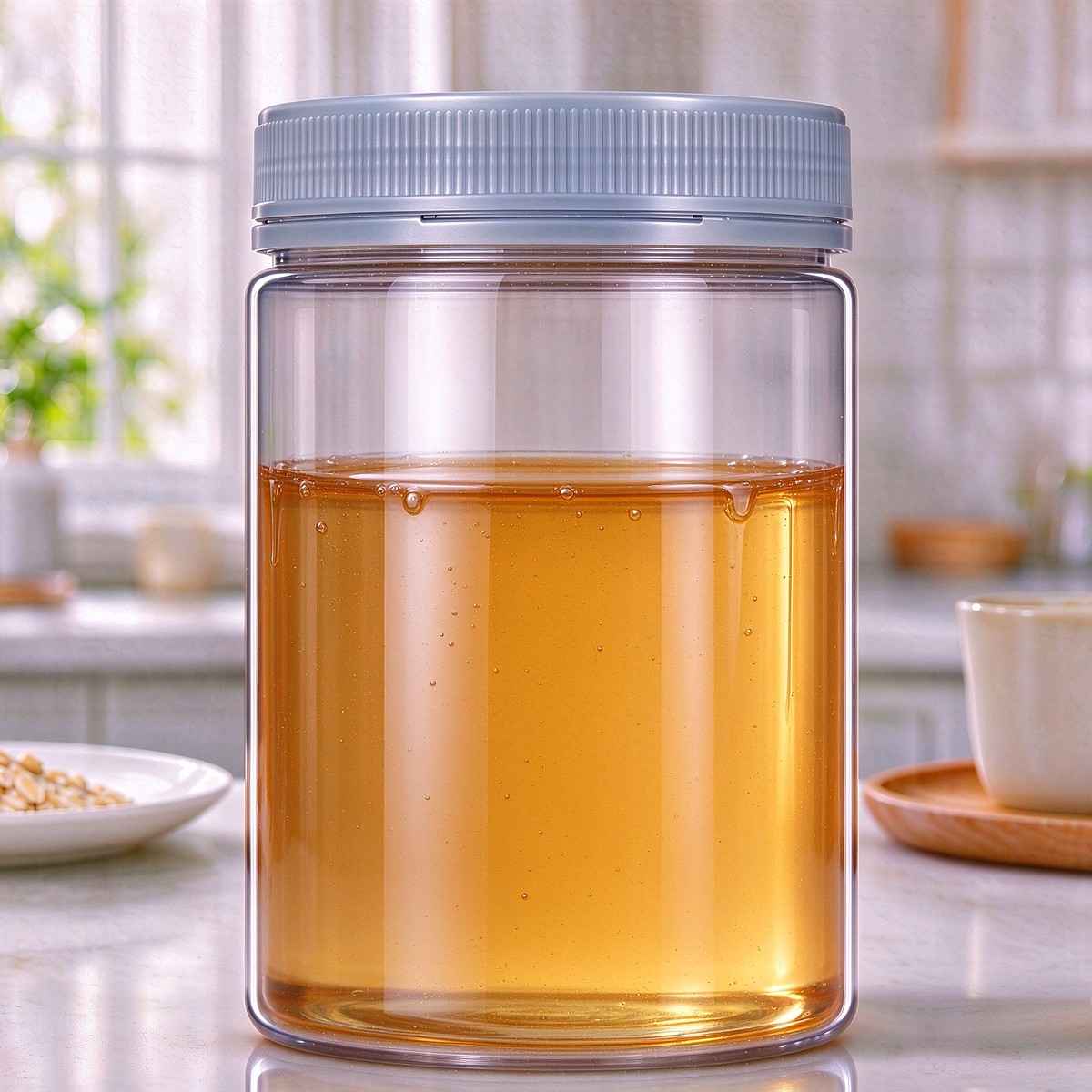
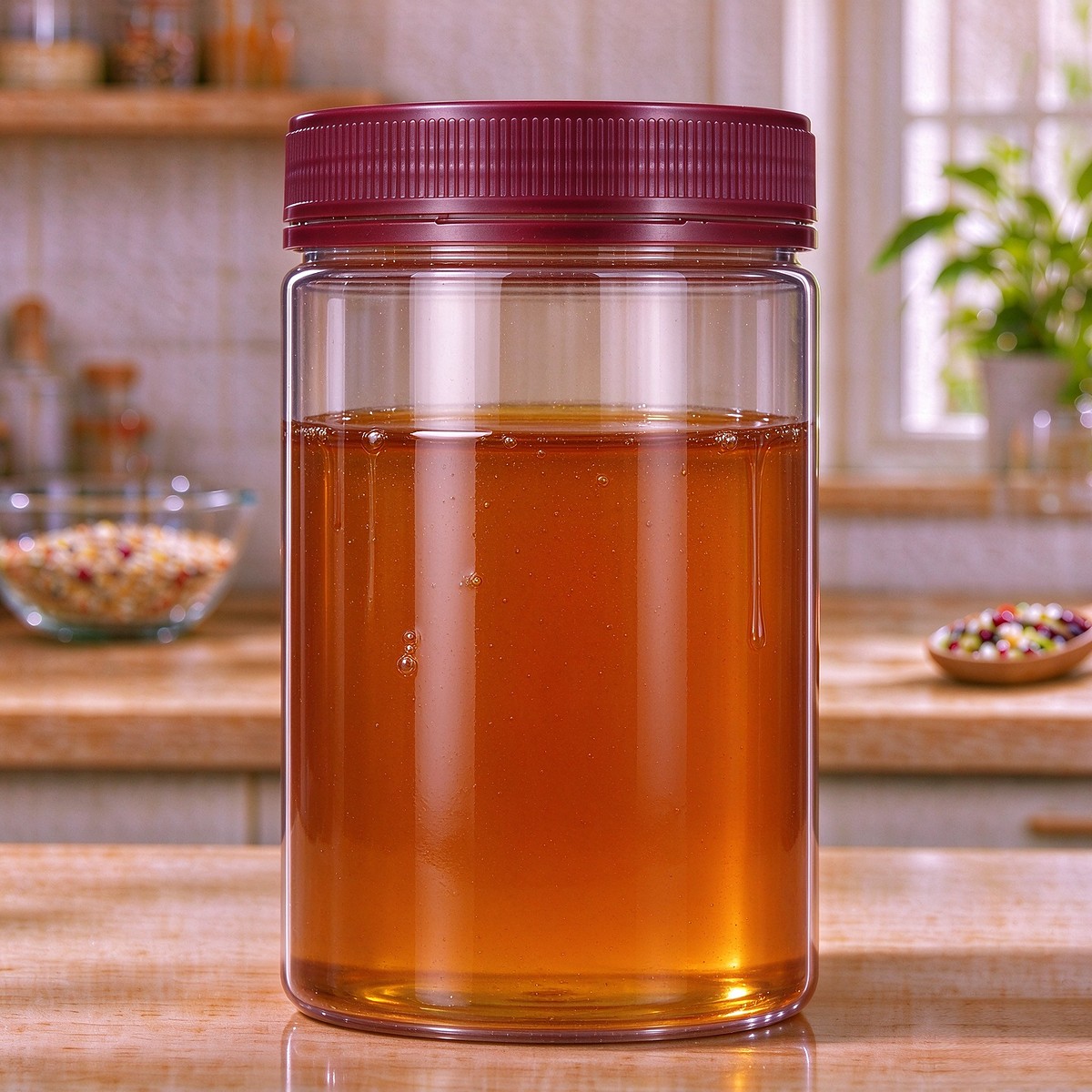
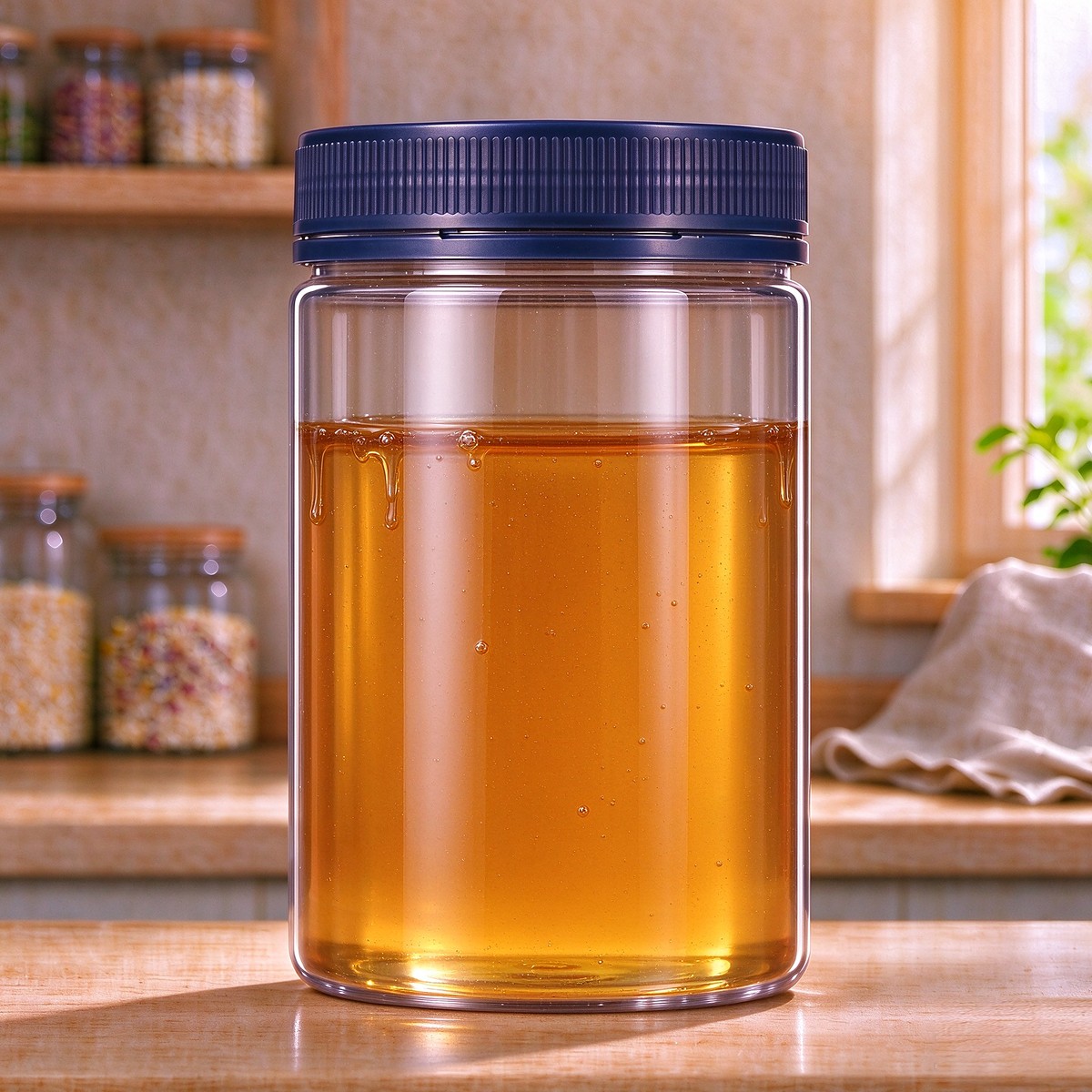
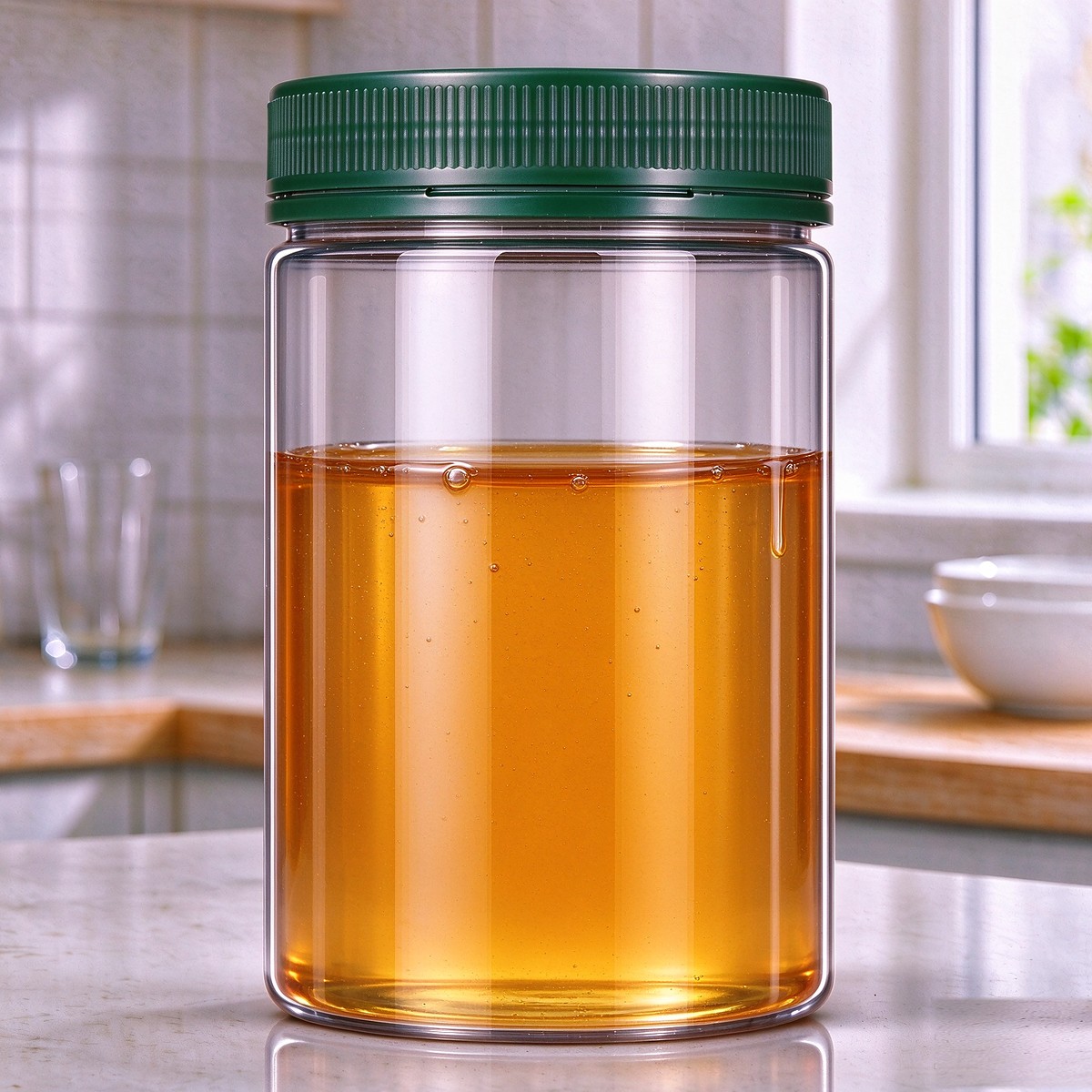
Where this jar works best
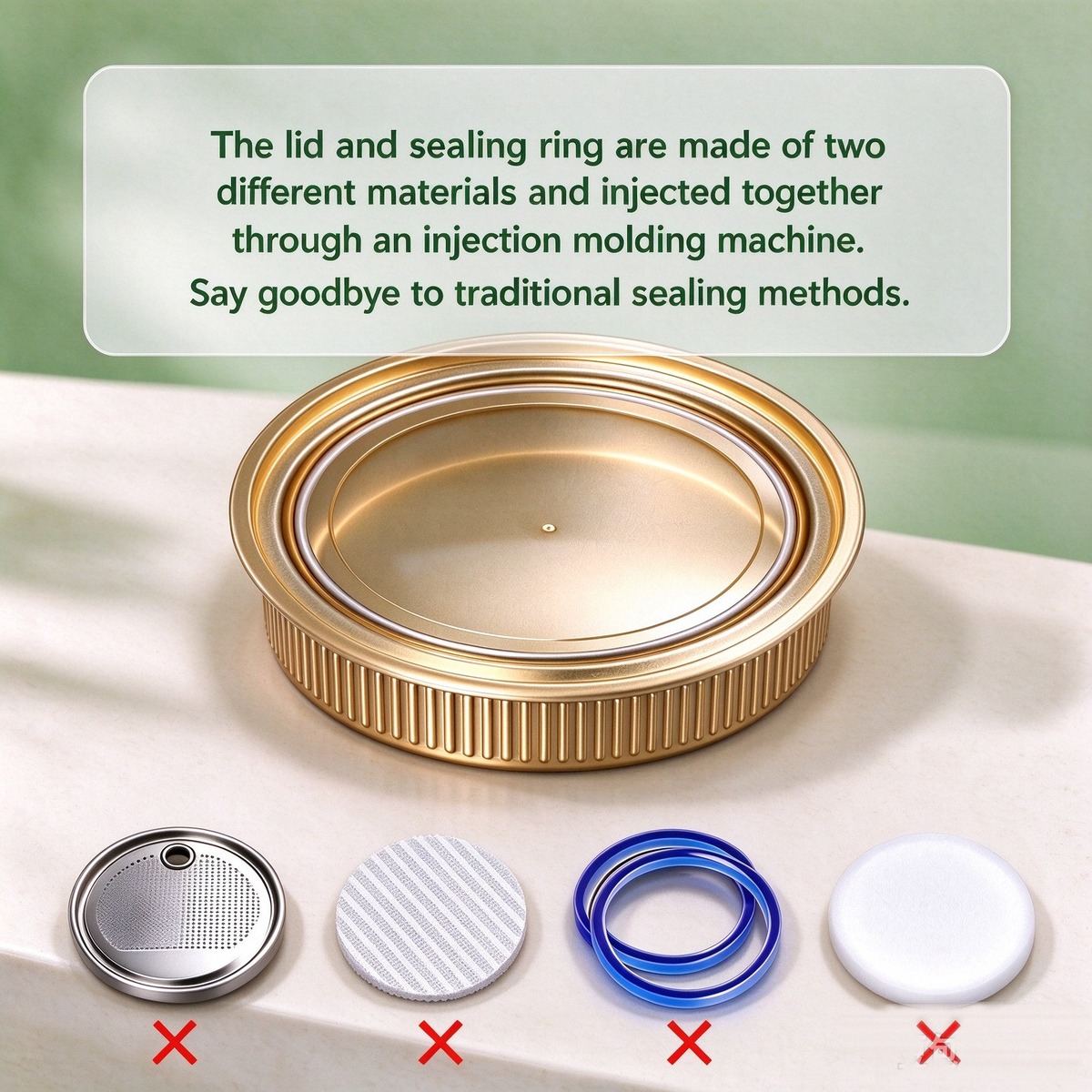
Honey is sold on how it looks in the jar before anyone tastes it, and it is ruined slowly rather than suddenly. It is hygroscopic: left behind a lid that only looks closed, it takes water out of the air until the water content crosses the limit for its type, and from there the pack is on a countdown to fermentation and a swollen lid. Nothing about that is visible on the outside, which is why this jar is built around the closure — an 82 mm lid with the gasket moulded into it, tested at −0.06 MPa for 30 seconds on every shift.
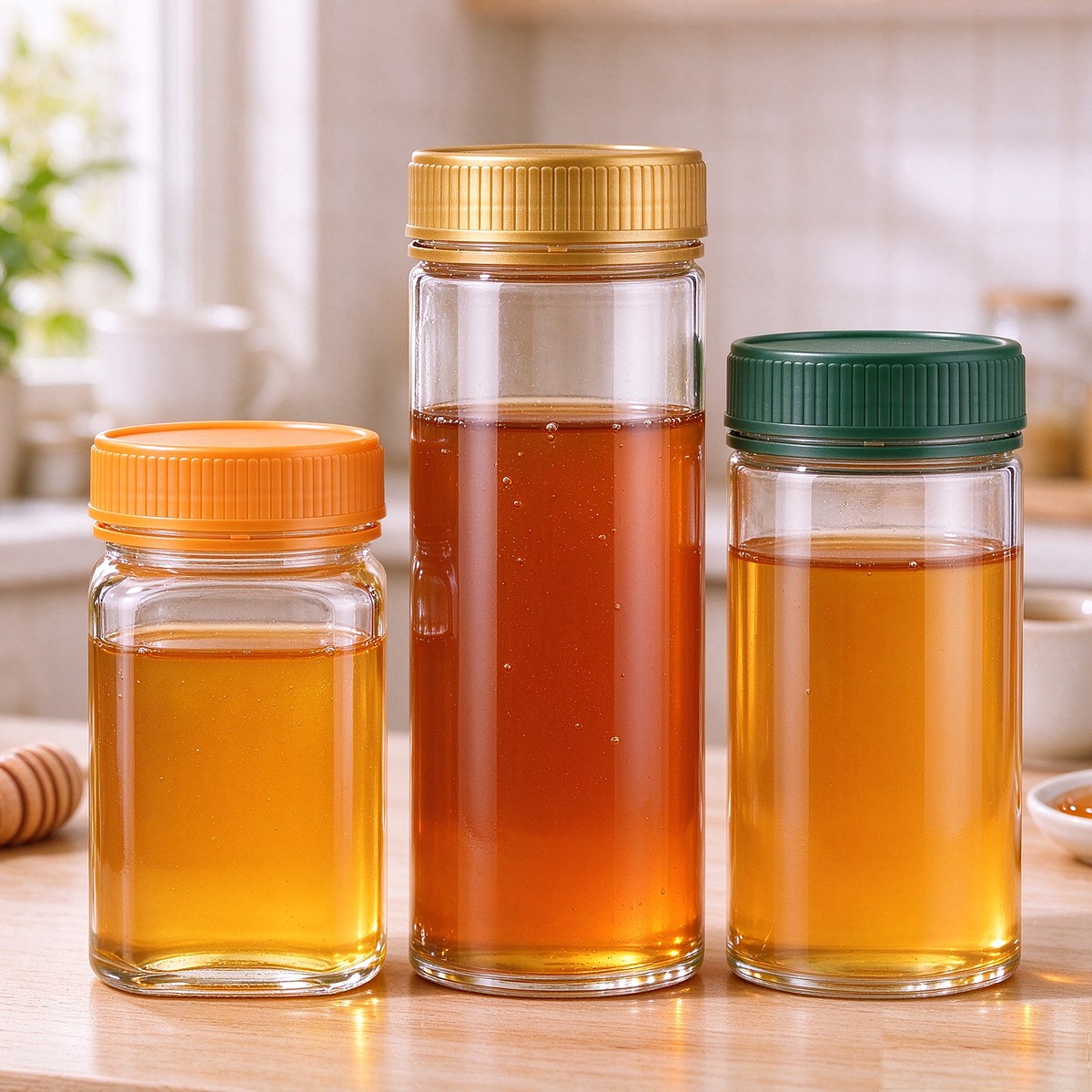
- Monofloral & wildflower honey — 250–1,000 ml; the clear body carries the colour, from pale acacia to dark buckwheat.
- Creamed & crystallised honey — 250–500 ml, wide mouth so a spoon reaches the corners without scraping.
- Honey with comb — 500 ml and up; the piece stays upright and the seal keeps the surface from drying.
- Honey, ginger & lemon spreads — 250–500 ml, warm-filled and sealed in one pass.
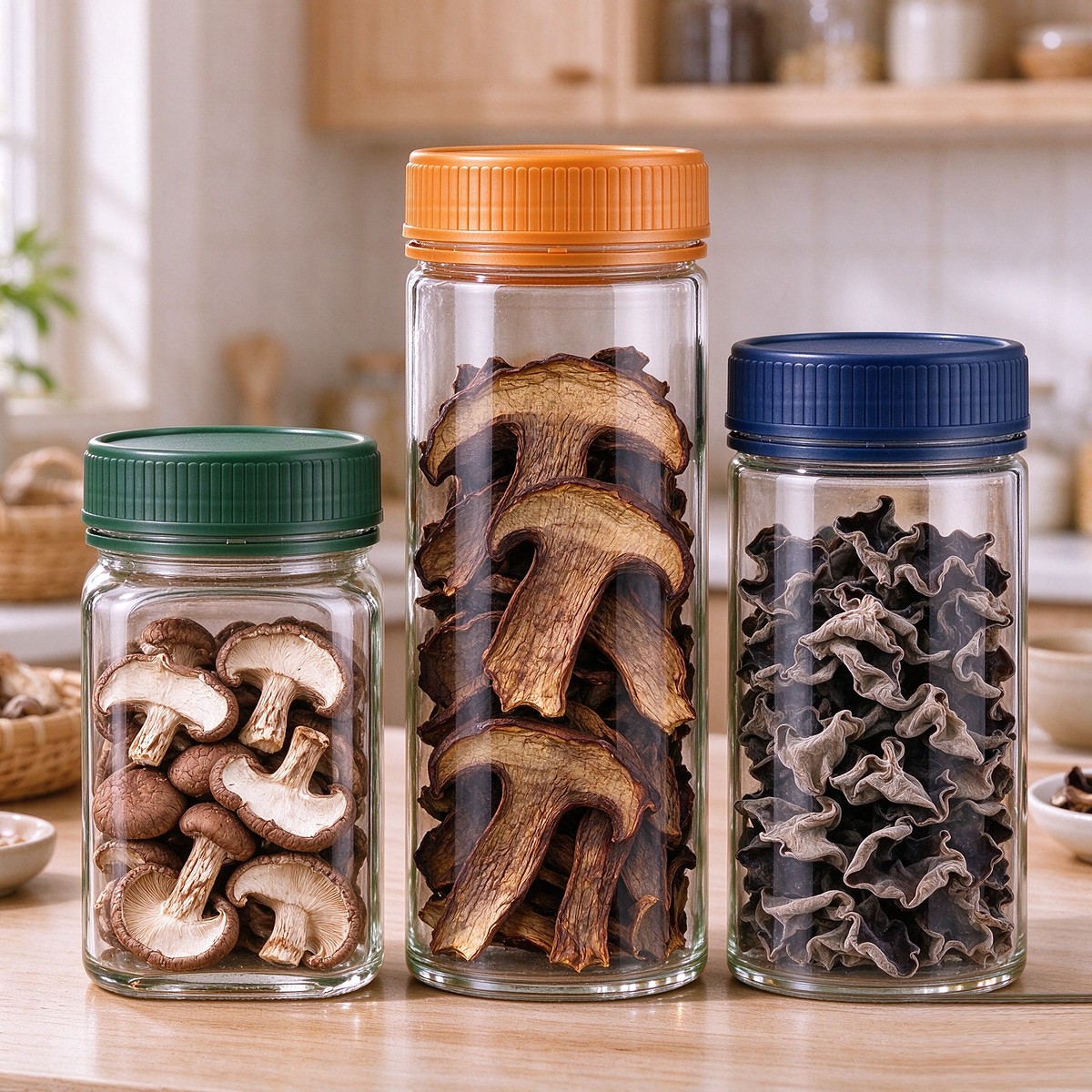
- Tasting, hotel and gift packs — 50–250 ml, coloured lids, three sizes on one shelf.
Why the 82 mm mouth
Honey is filled warm, at 40–50 °C, and it is thick enough that a narrow neck means the nozzle has to be lifted early — which leaves a thread of honey running down the outside of the jar and into the cap grooves. Once it sets there it is not honey any more, it is a sticky sugar layer that stops the next lid seating flat. 82 mm gives a filling nozzle room to be pulled cleanly, takes a honey dipper or a serving spoon, and still leaves a shoulder wide enough for a printed band. On a 1 L jar that matters more than another 50 ml of volume.
Why the ring is molded into the lid
A loose gasket in a honey line fails quietly: honey creeps behind it, crystallises, and welds the ring into its groove, so the next closure seals on sugar instead of on plastic. We co-inject the TPE ring into the PP lid in the same tool, so the two materials are bonded and there is no gap for honey to hide in. A lid whose ring has hardened still screws down tight by hand — but it will not hold vacuum, and that is the failure a buyer only finds after the pallet has sat in a warm warehouse for a month.
Honey is judged twice: in the shop by its colour through the jar, and at home by whether the last spoonful pours as cleanly as the first.
Customization
Capacity and shoulder shape are open — 50 ml to 1.5 L is what the molds cover today, and a new size is a tooling project rather than a catalogue change. Lid colour matched to your Pantone reference, body in clear or a light amber tint, 1–4 colour printing on the lid, and a printed sleeve, shrink band or label applied before packing. For gift and seasonal lines we hold the mold and change only the lid colour, which keeps tooling off a short run.
Packing & shipping
60 pcs per carton, lids fitted so the ring is not distorted in transit, and the carton lined so the bodies do not rub. Carton size, pallet plan and container loading are confirmed against the exact size you order, and loading photos are sent before dispatch on every shipment.