A chemical container fails at the closure
Chemical products are usually packed for years, not weeks. A reagent bottle or a 20-litre jerry can may sit in a warehouse through two summers before it is opened, and the damage happens slowly: moisture crosses the thread, solvent vapour escapes past the cap, a powder cakes into a solid block, or the liquid oxidises into a colour the customer will not accept.
None of these failures is dramatic. They are all the same failure — the seal is a separate part, it takes a set, and after the first opening it never closes the same way again.
What the closure has to do
For a chemical pack the lid has to do four things at once: hold a barrier against moisture and vapour, survive the product itself, allow the container to be reclosed repeatedly on the filling line, and be safe to open on site. Foil and liner systems do the first one only once. Our answer is the same one used across our food range — a TPE ring co-injected into the PP lid in a single mould, so the sealing lip is part of the lid and cannot fall out, shrink or be left off.
- Moisture and vapour barrier — the lip seals on the rim, not on the thread, so humidity does not work its way down into the container.
- Chemical resistance — PP and TPE resist the acids, alkalis, alcohols and detergents that swell a foam pad or soften a cheap liner.
- Repeatable closing — no liner to compress, so the torque needed to seal is the same on the hundredth opening as on the first.
- Reclosure in the field — the lid can be taken off, the product used, and the container closed again without a tool or a new seal.
Some chemical raw materials go off simply because the container was opened once. The job of the closure is to make that opening reversible.
Built for the filling line
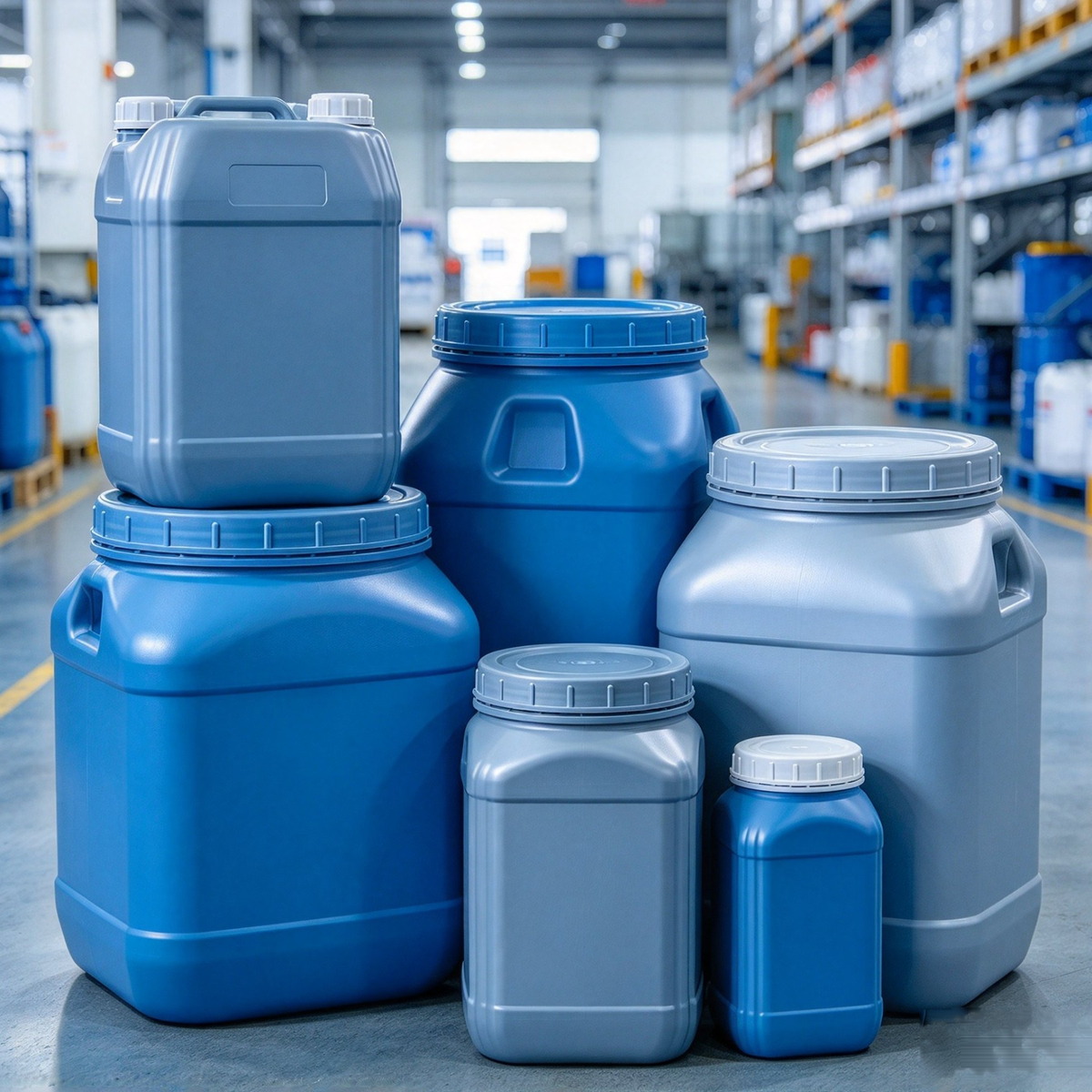
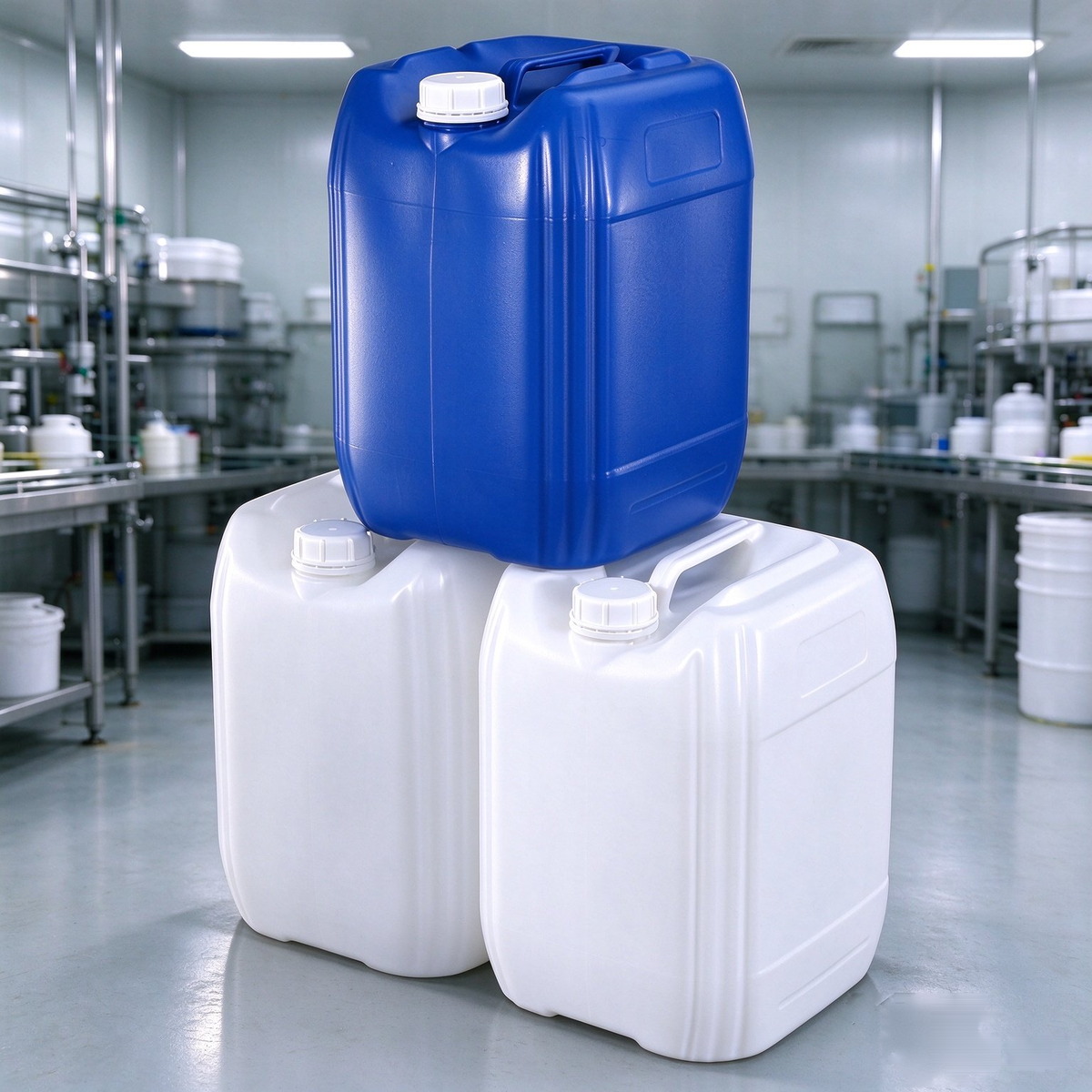
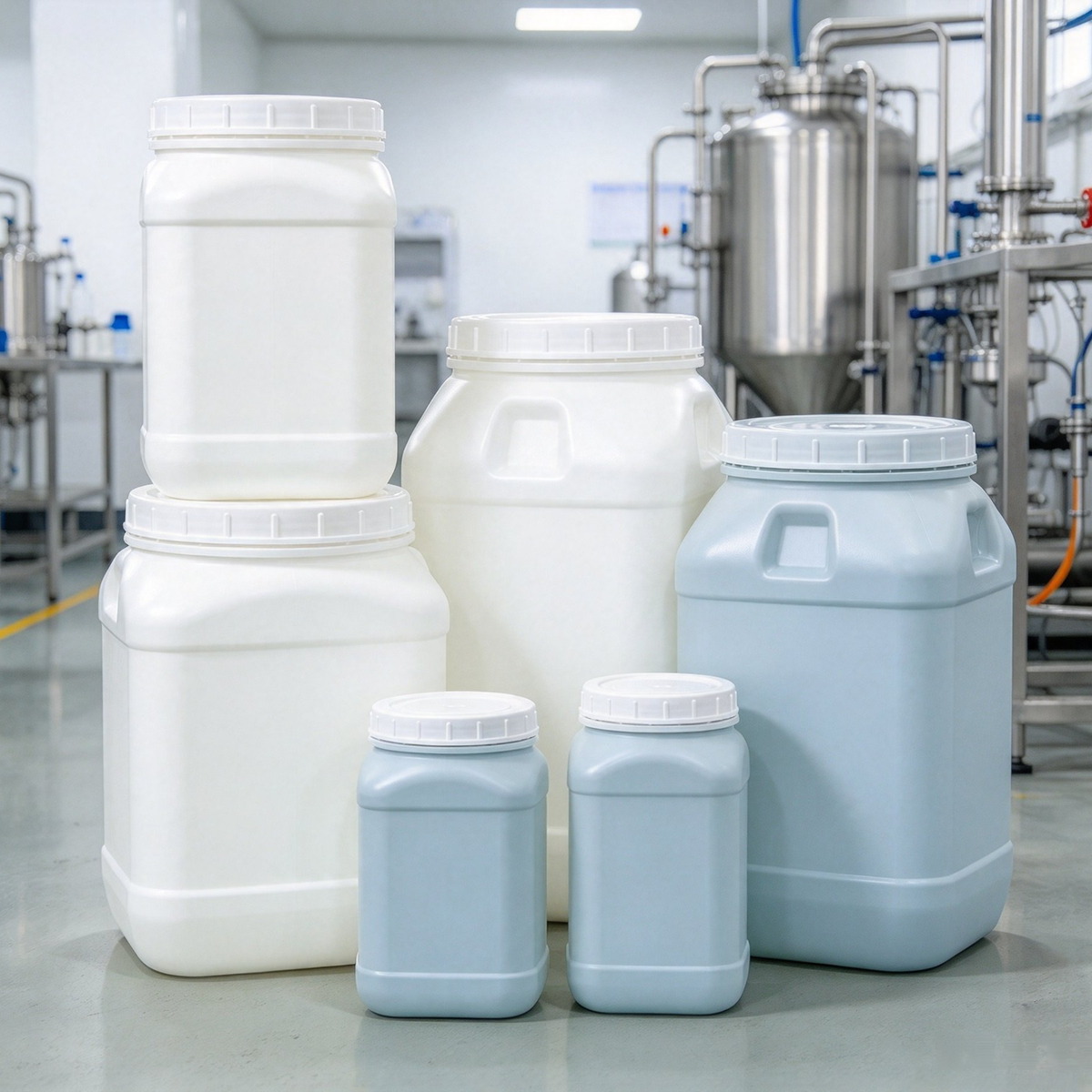
Bodies are moulded in HDPE or PET depending on what the product attacks, from 50 ml laboratory bottles through 1–5 litre cans to 10 and 20 litre stackable jerry cans and drums. Wide-mouth drums take a scoop or a ladle; narrow-neck bottles take a pour ring. On the same body we can fit a tamper-evident band, a child-resistant cap or a vented cap for products that gas off, and moulded graduations or a label recess if the pack is used as a measuring container.
Where it is used
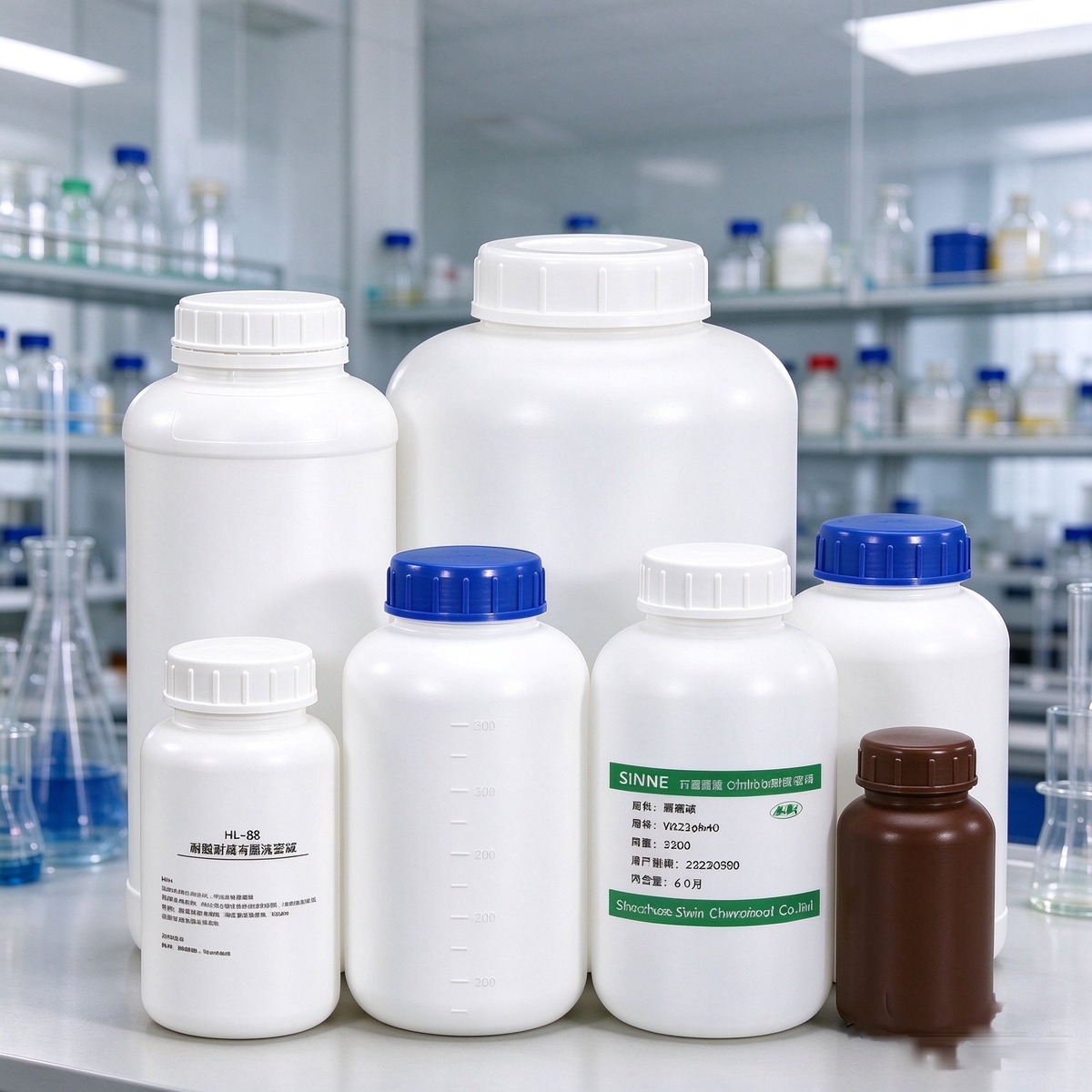
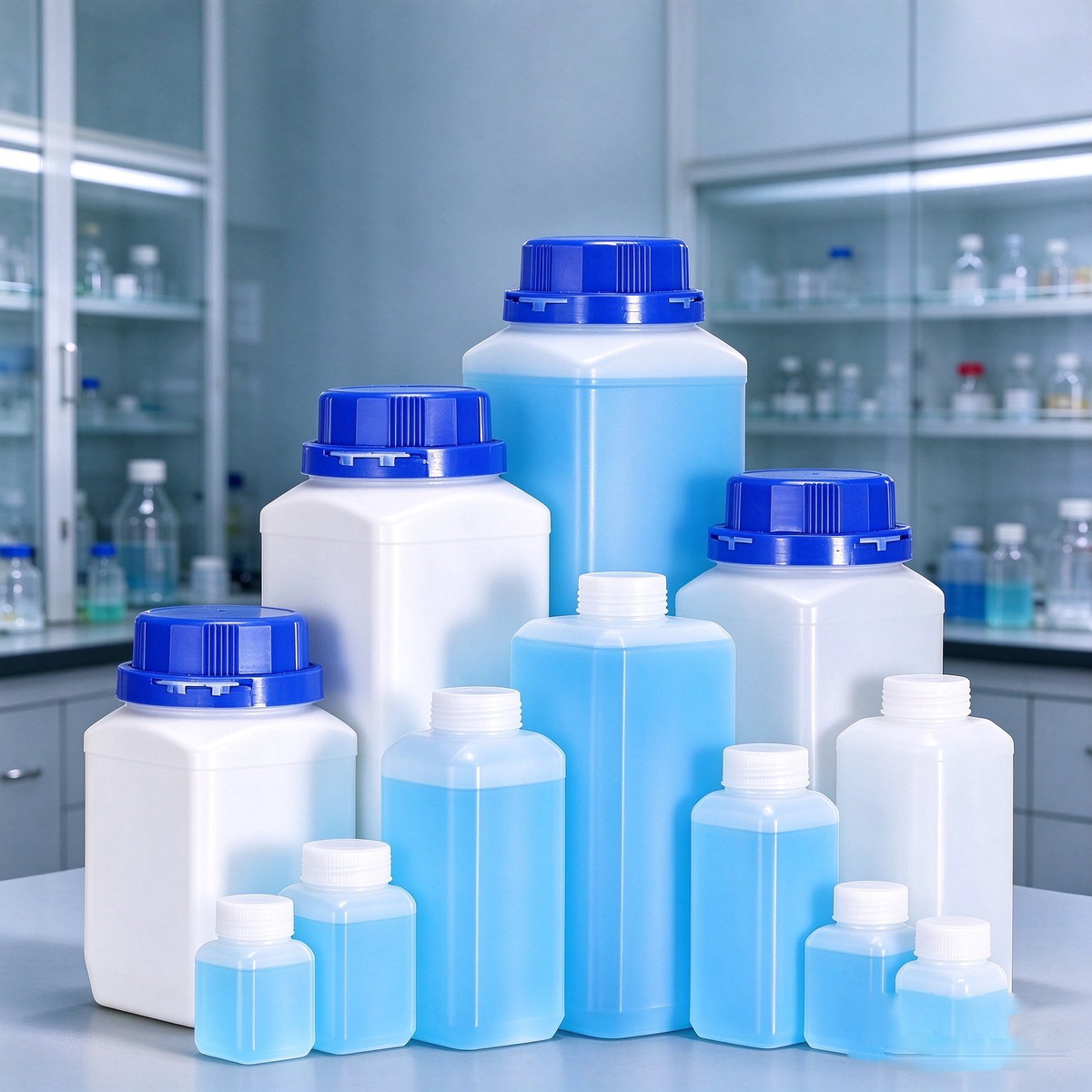
- Laboratory reagents — 50–1,000 ml HDPE bottles in white, amber or natural, with the sealing ring colour-coded per product family.
- Agrochemicals — 1–20 litre cans with tamper-evident caps and a wide mouth for wettable powders.
- Water treatment and pool chemicals — stackable drums that hold their seal under the weight of a pallet load.
- Solvents, thinners and adhesives — vapour-tight closures on HDPE bodies, with a solvent-resistant ring compound.
- Pigments, coatings and powder additives — fine powder stays out of the thread, so the lid still runs freely after a hundred openings.
Custom from the mould up
Where a standard jar does not fit the product, we build the mould for it: capacity, diameter, neck finish, handle, stacking shoulder and closure type are all open. A new cavity takes 20–25 days, a colour change on an existing mould takes days. Because the sealing system is the part we control, we can quote the ring compound and the rim flatness against the chemical you are packing, and send first-article samples with a dimensional report before production.
Packing & shipping
60 pcs per carton as standard for bottle sizes; drums and jerry cans are palletised with a layer board between tiers so the closures carry no load. Carton size, pallet plan and container loading are confirmed against the exact container you order, and loading photos are sent before dispatch on every shipment.