Why traditional seals stop working
Almost every “leak-proof” jar on the market is really a jar plus a separate sealing part — and every separate part has a failure mode. The seal is good on the day it leaves the factory and gets worse from there.
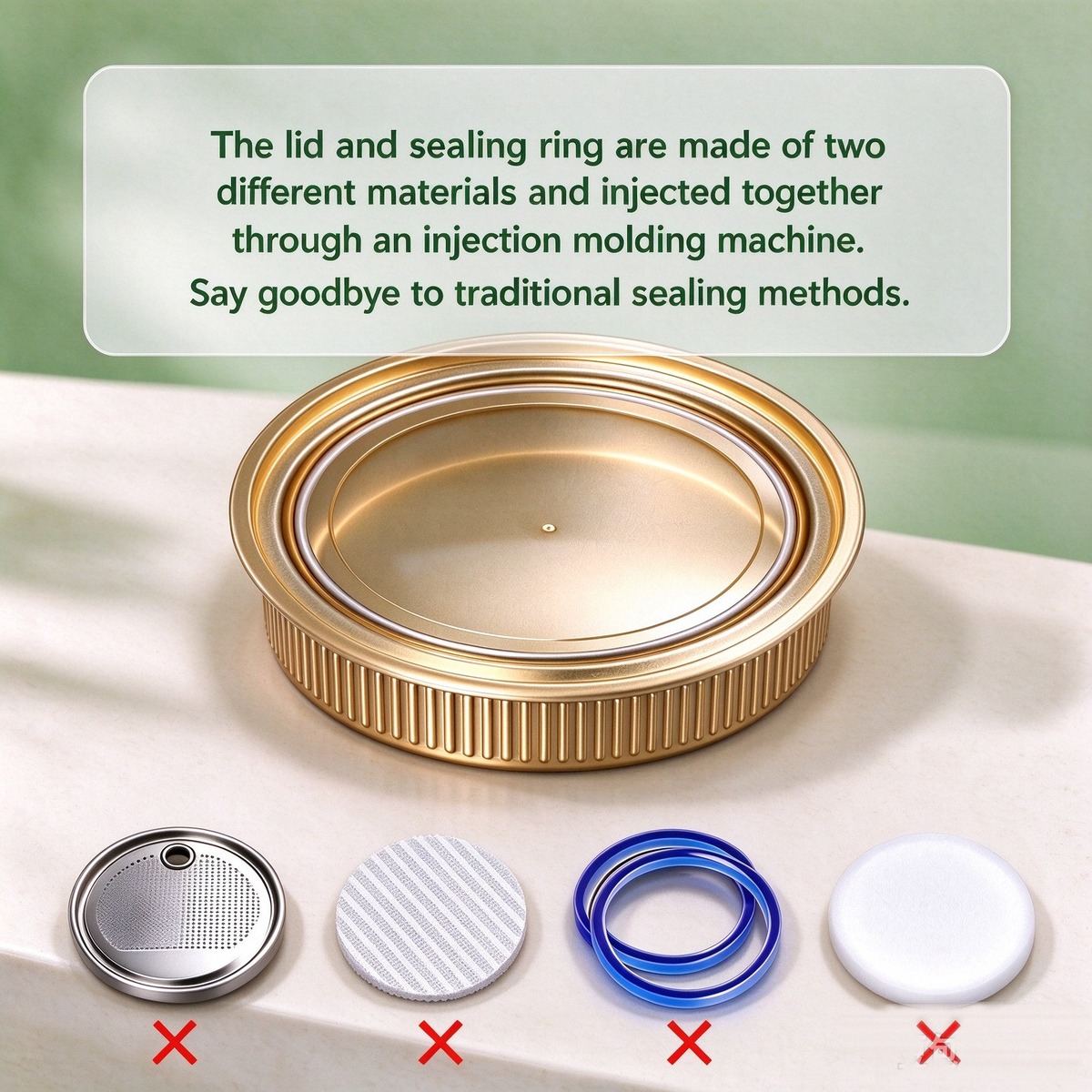
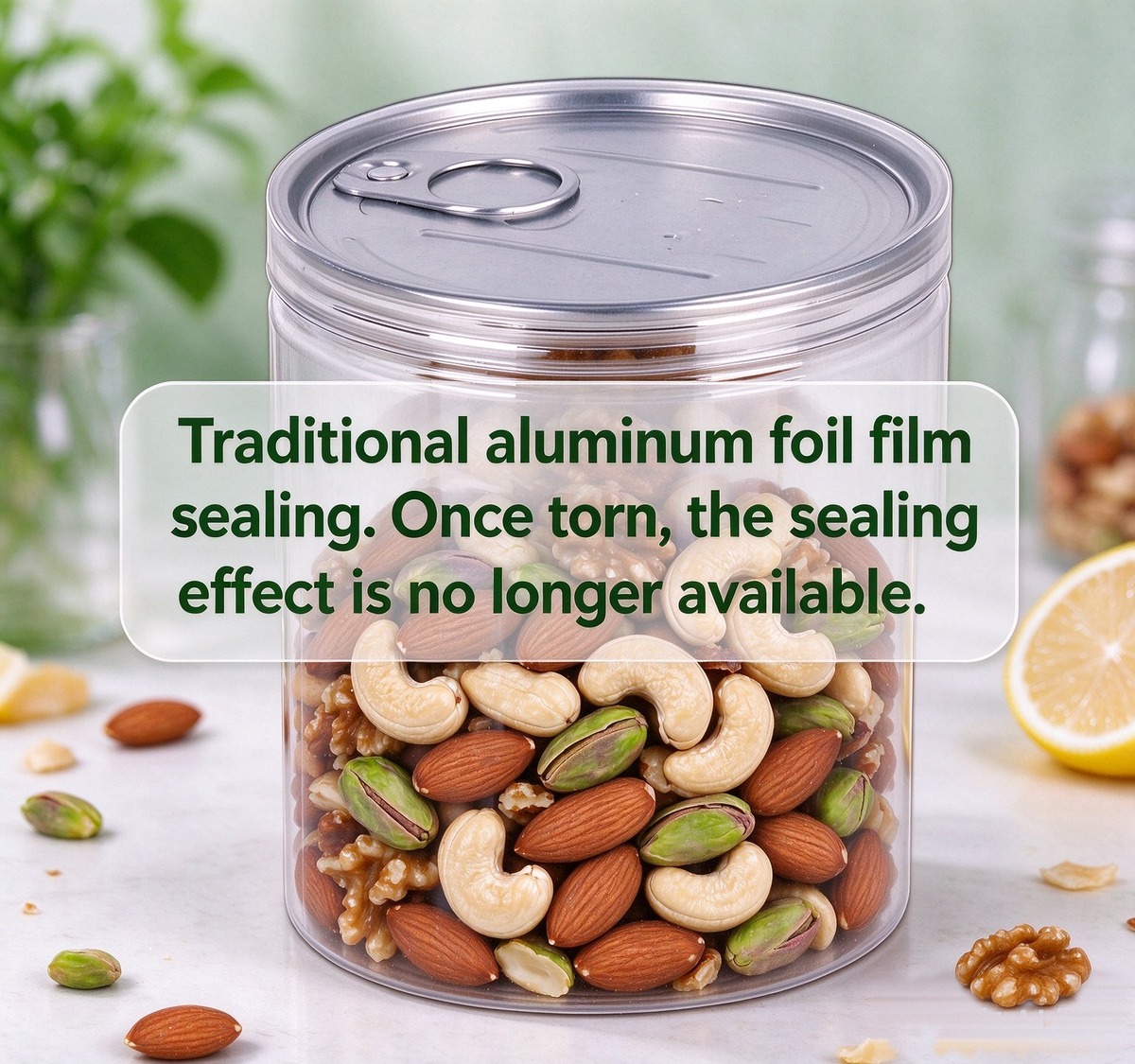
- Aluminium foil — induction-sealed once. The moment the customer tears it off, there is nothing left to seal with.
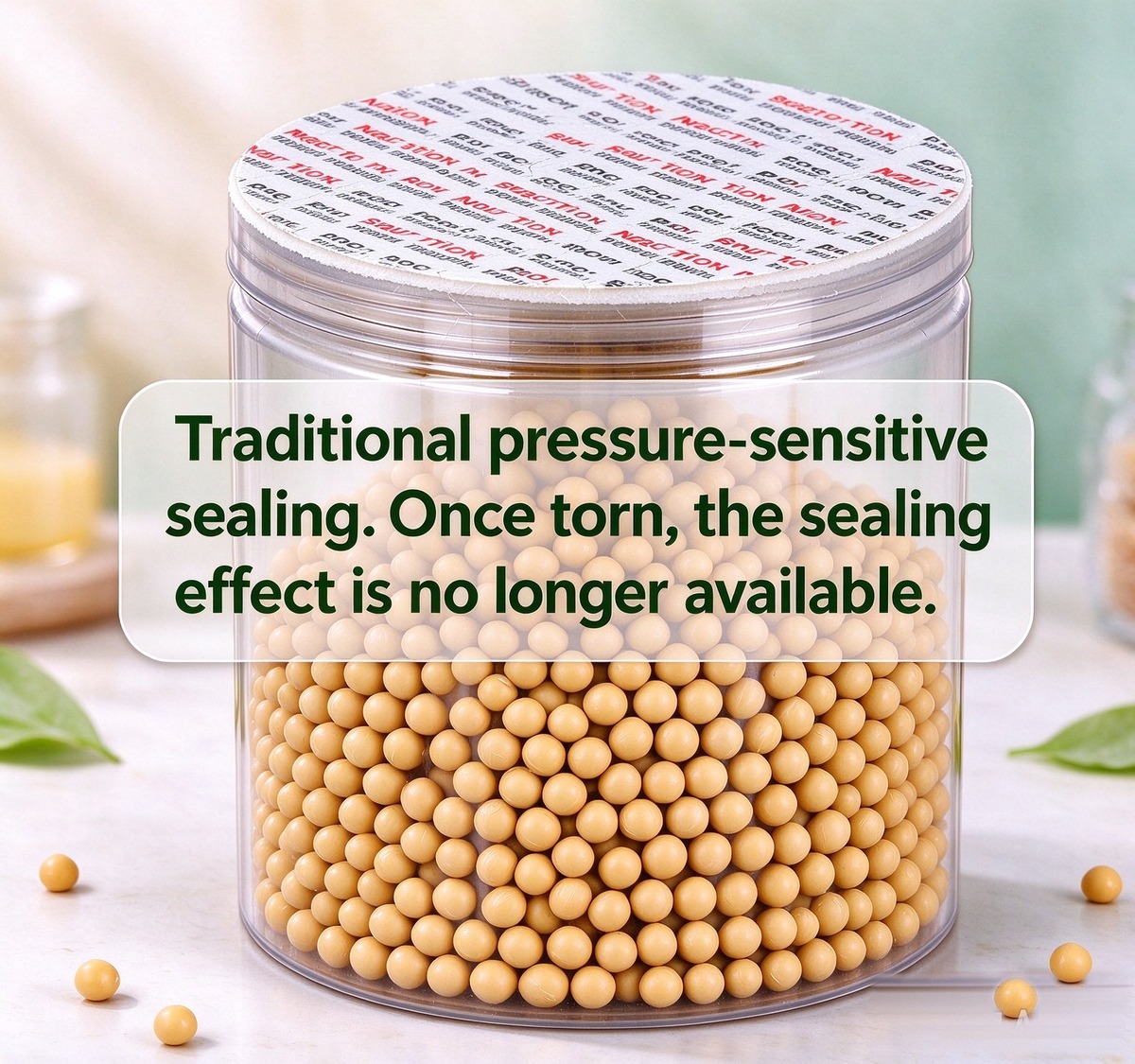
- Pressure-sensitive liner — seals on the first turn only. Reopen the jar and the liner has already taken a set.
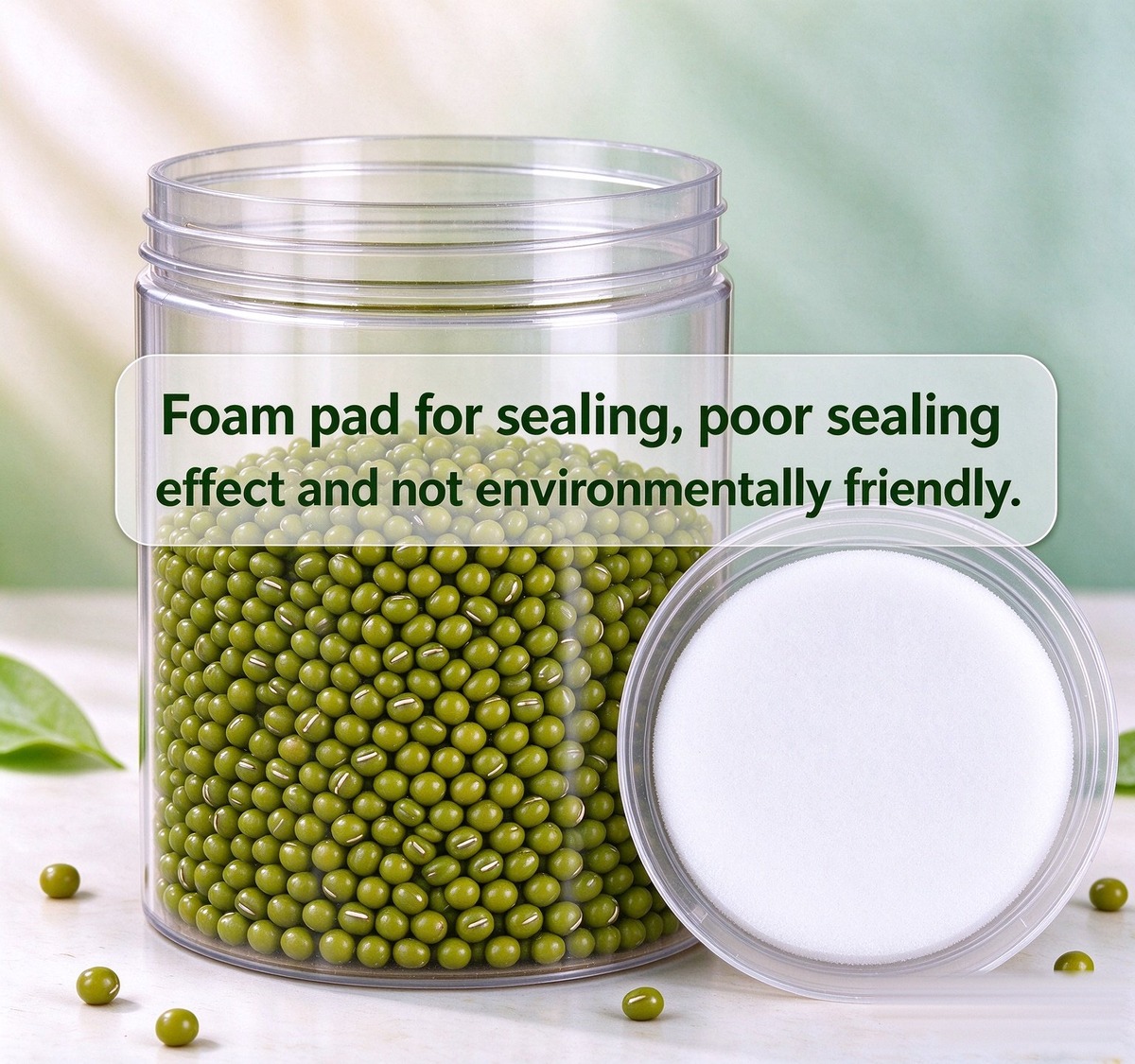
- Foam pad — cheap and porous; it compresses permanently and is not recyclable in most streams.
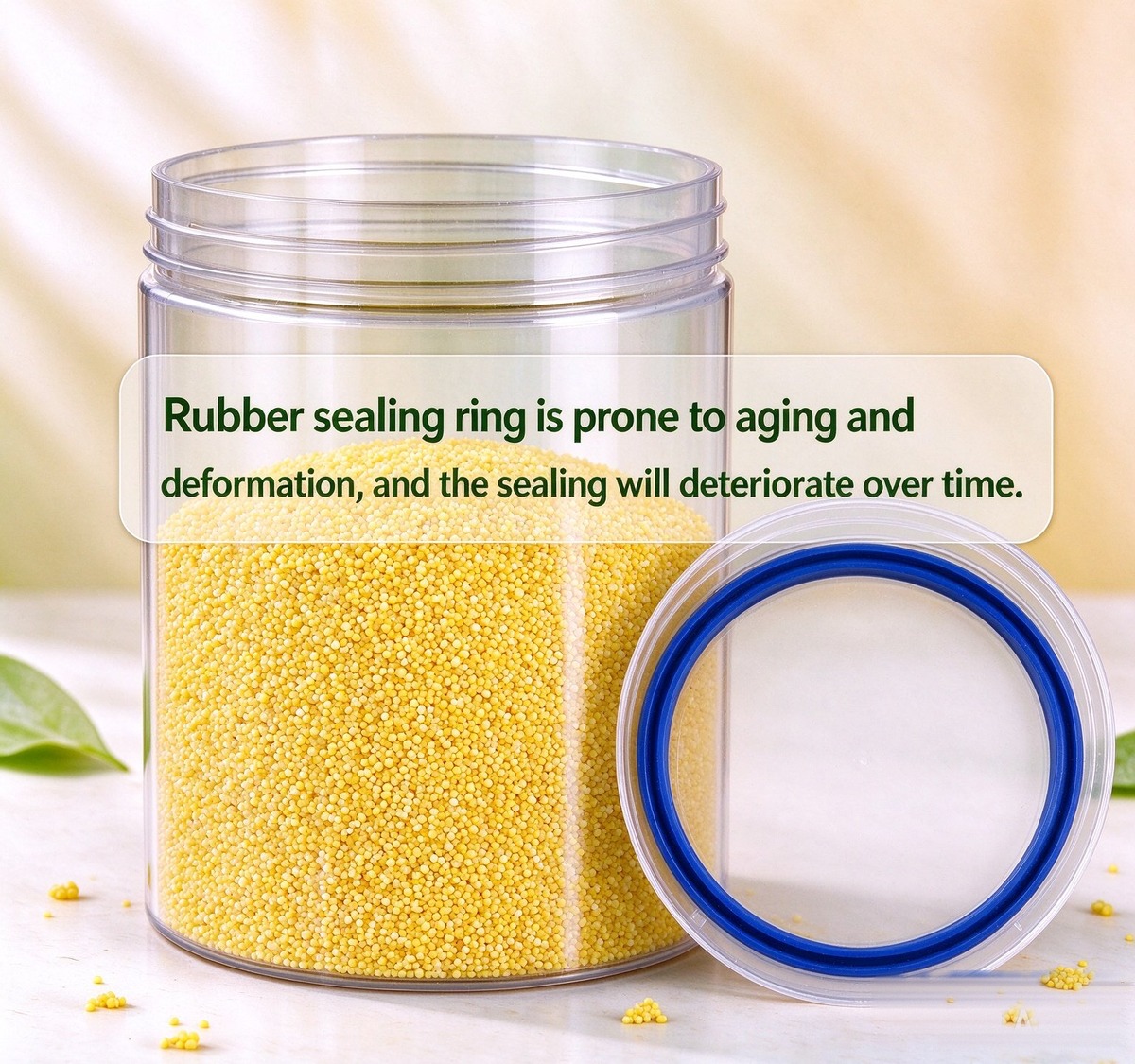
- Rubber ring — a loose part that ages, hardens and deforms, and drops out of the lid during washing.
What co-injection changes
Instead of adding a gasket afterwards, the TPE ring is moulded into the PP lid in the same tool. Two materials, one part, no glue and no assembly step. Because the ring is chemically bonded to the lid, there is no gap for product to sit in, nothing to fall out in the dishwasher, and no age-related shrinkage between ring and lid — the two materials move together. The sealing lip stays where it was moulded for the life of the lid.
A seal is only proven under load: a full 3 kg jar turned on its side is the test that separates a gasket from a moulded ring.
Tested, not claimed
Every production batch is checked at −0.06 MPa for 30 seconds, and the lid is loaded with more than 3 kg (6.6 lb) of product — liquids included — with no leakage at the thread. The same lid fits the 82 mm body (50–1,500 ml) and the 95 mm body (200–3,000 ml), so a single lid programme covers a full jar range and a single mould change covers a new capacity.
Where it earns its cost
- Honey, syrups and sauces — sugar crystallises in any gap; a moulded ring leaves no gap, and the jar can be re-closed after every use.
- Oils, dressings and marinades — the 3 kg load test is the everyday case: a full bottle lying in a carton.
- Powders and flour — fine particles find pinholes; the co-injected lip seals on the rim, not on the thread.
- Chemicals and household liquids — PP and TPE resist the products that swell a foam pad.
- Retail and gift packs — no foil means no induction line, no liner inventory and one part to stock.
Customization
Lid diameter 82 mm or 95 mm as standard, other diameters on tooling. Two-colour combinations are the point of the process: lid and ring can be specified in contrasting or matched colours, matched to your Pantone reference, with 1–4 colour printing on the lid top. Body in clear or light amber, capacity and profile open from 50 ml to 3,000 ml.
Packing & shipping
60 lids per carton, nested so the sealing lip is not loaded in transit. Carton size, pallet plan and container loading are confirmed against the exact lid and body you order, and loading photos are sent before dispatch on every shipment.