
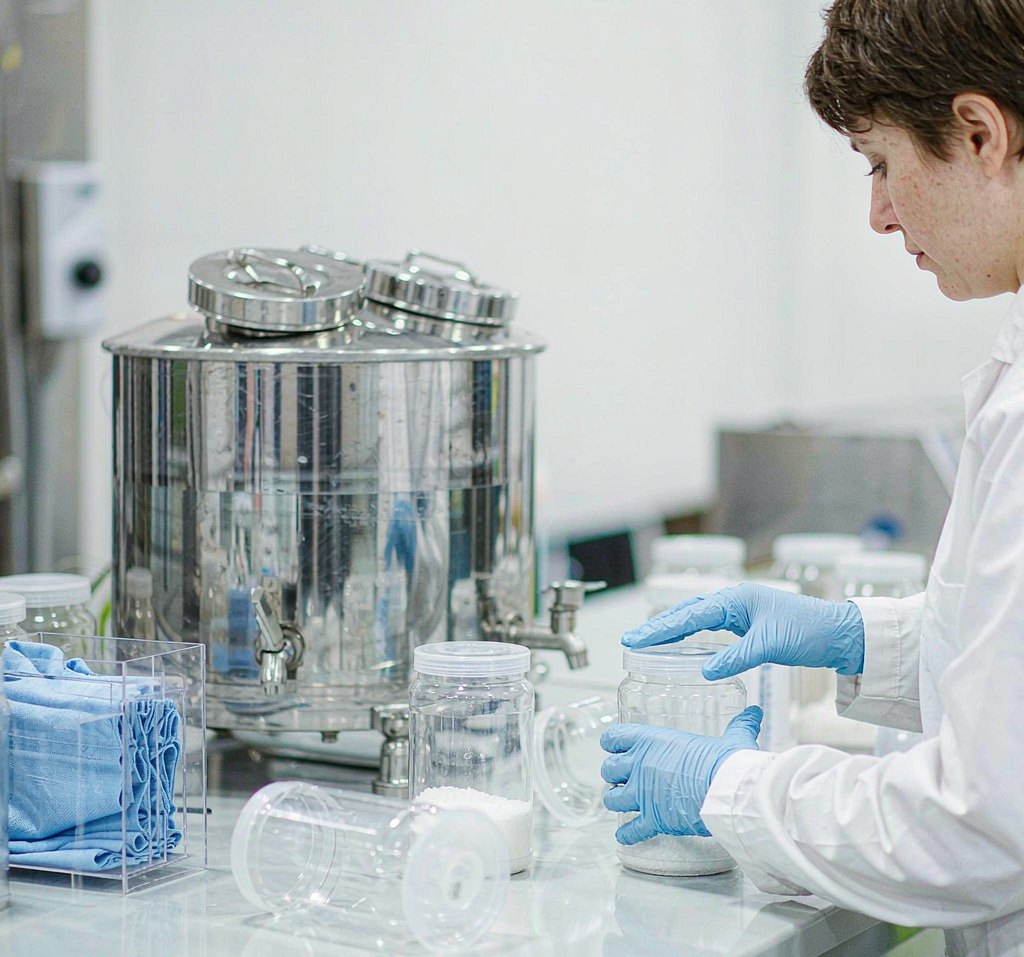
A customer sends a photo of a carton with flour dust in it. The lid was on — the latch clicked, the tamper band was intact — but somewhere between the filling line and the warehouse the seal stopped sealing. The first question is always "is the jar out of spec?" In our experience the answer is sometimes yes, and it is almost never the one the customer suspects.
These are the four causes we test for, in the order that finds the answer fastest.
01 · Gasket compression
A silicone gasket does not seal by touching the rim; it seals by being compressed between 25% and 35% of its thickness. If the latch geometry allows the lid to close before that compression is reached, the jar feels closed and holds nothing. The test is simple: close a sampled jar, measure the gap between lid skirt and body rim with a feeler gauge, and compare against the drawing. A gap that grows over a production run usually means the tool is running hot.
02 · Lid ovality
A round lid that comes out of the mold slightly oval will seal on two sides and leak on the other two. This is a cooling problem, not a design problem: uneven cooling around a thick lid edge pulls the part out of round. We check ovality on a coordinate gauge every two hours and keep it under 0.25 mm on a 105 mm lid. On thin-wall lids, cooling time is the parameter that matters most — not cycle time.
03 · Gate blush and flow lines
Cosmetic defects are often sealing defects in disguise. A gate blush on the sealing surface leaves a raised spot that lifts the gasket off the rim by a few hundredths of a millimeter. If the leak is a slow one that only shows up under vacuum, look at the gate area first.
04 · Packing pressure and drop load
A jar that seals on the bench can still fail in a container. Lids stacked under load creep; latches take the load instead of the body; a 1.2 m drop test on a corner will tell you more about real shipping performance than any bench measurement. We drop test six jars from every batch, corner-down, on a concrete floor.
Test the closure, not just the wall. A jar with a perfect wall thickness and a 0.3 mm lid gap is a jar that comes back.
What we do on our side
Every production lot keeps a retained sample and a seal report: vacuum value, hold time, gasket gap and drop result. If a customer reports leakage, we ask for the batch number and a photo, pull the retained jars, and repeat the test against the original record. If the batch passes and the shipped goods do not, the cause is downstream — packing height, transport vibration or storage temperature — and we will say so, with the numbers.
If you are chasing a leak right now, send us the details. A short checklist and a measured comparison usually settles it within a day.